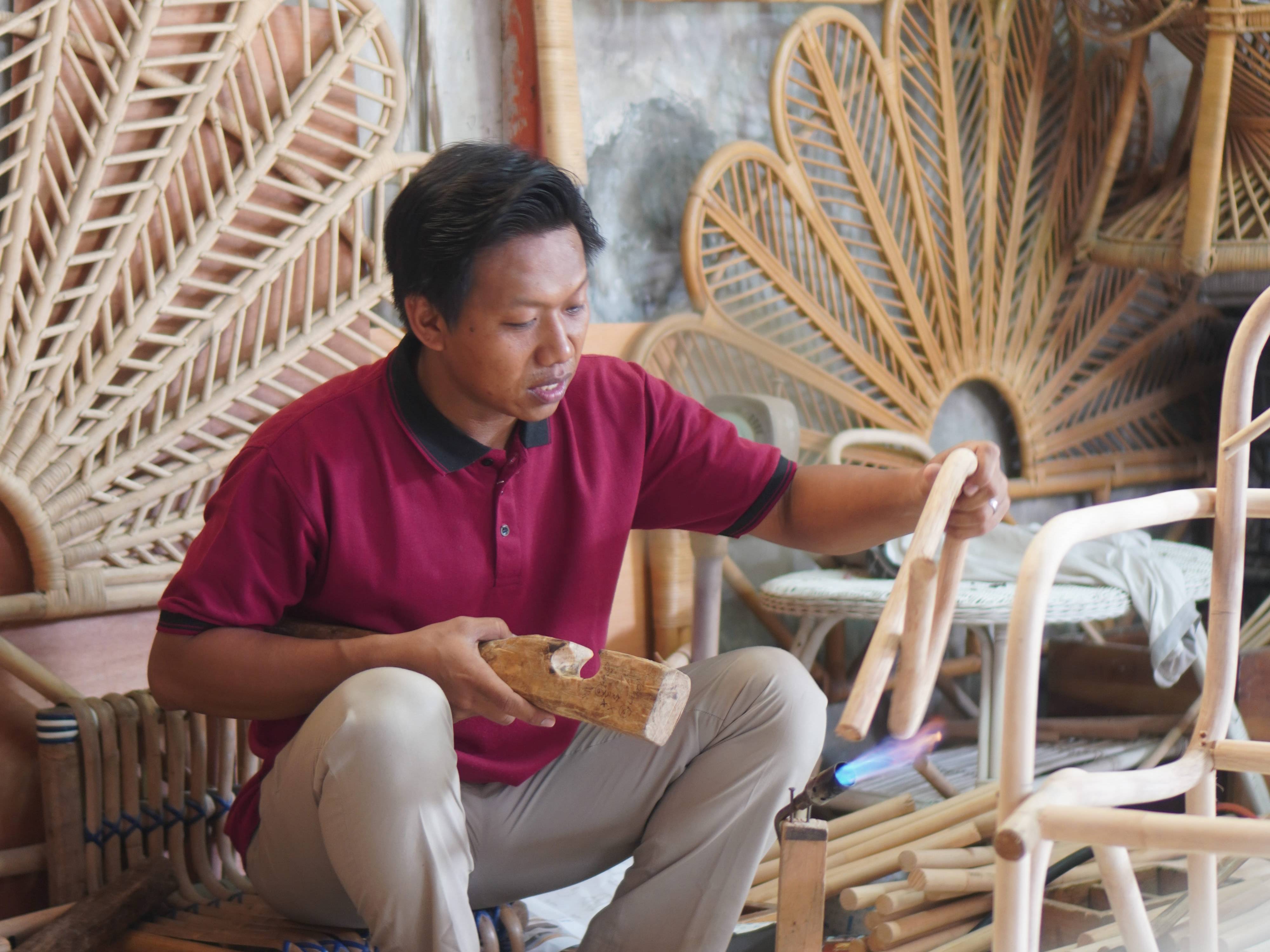
Trangsan Village
Sukoharjo, Central Java
Scroll to view more
Early History (Before 1910)
The majority of Trangsan Village residents are bamboo craftspeople. Their products include simple household items and agricultural tools, produced using traditional weaving methods.
The Beginning of the Arrival of Rattan (1910-1937)
Around 1910, artisans from Cirebon introduced rattan to Trangsan Village. Many residents began to become rattan craftsmen, and Trangsan Village became known in Dutch and European newspapers thanks to the development and popularity of rattan crafts, which began in 1927.
The development of rattan in Trangsan is inseparable from the figure of Ki Demang Wongso Laksono, a courtier at the Kasunanan Surakarta Palace. He introduced rattan crafts when he was sent to accompany the Surakarta Palace delegation to Madura in 1937. Ki Demang brought several rattan stalks back to Trangsan and began making hats (hats woven from rattan) and other crafts.
Heritage and Traditions of Craftsmen (1940-1965)
In 1940, most Trangsan villagers were still farmers, but rattan crafts began to develop as a side business. When Ki Demang died in 1948, his students continued the craft business.
In 1965, large-scale rattan began to enter Trangsan Village, but the community was still more accustomed to using bamboo. Production still used a "blarak," which then used an oil stove to shape and bend.
Development and Early Modernization (1975-1985)
In 1975, the government began mentoring artisans by producing several products. Then, in 1976, foreign buyers were mentored by the Dutch-run CJEDP institution. With support from the Ministry of Industry, Trangsan artisans conducted a comparative study in Cirebon, enabling them to increase product variety and refine their craftsmanship.
Development and Export Era (1986-2000s)
In 1986-1987, rattan crafts began to develop with support from the Central Java Regional Development Planning Agency (BAPPEDA) which provided training and brought in experts from the Philippines to teach export product standards. Trangsan Village exported its first rattan products, stemming from connections with the local government in industry and trade, as well as through exhibitions held in Jakarta. By the 1990s, approximately 90% of its production was exported, making the village one of the largest rattan furniture centers in Indonesia.
Adaptation and Global Trends (2005-Present)
Artisans face global challenges such as rising raw material prices and competition from other Asian countries, but innovation continues to adapt to international market tastes. Today, buyers not only purchase finished products but also provide design ideas, which are then created by artisans.