The decline of rural populations due to migration to urban areas is a challenge faced by many countries, including Japan and Indonesia. Driven in part by economic considerations, migration affects the sustainability of rural communities, including agricultural activities, local cultural practices, and community regeneration. With research grant support from the Sumitomo Foundation, a research team conducted a study on urban–rural exchange as an approach to fostering collaboration between urban and rural communities, using Iketani Iriyama, Japan, as a case study.
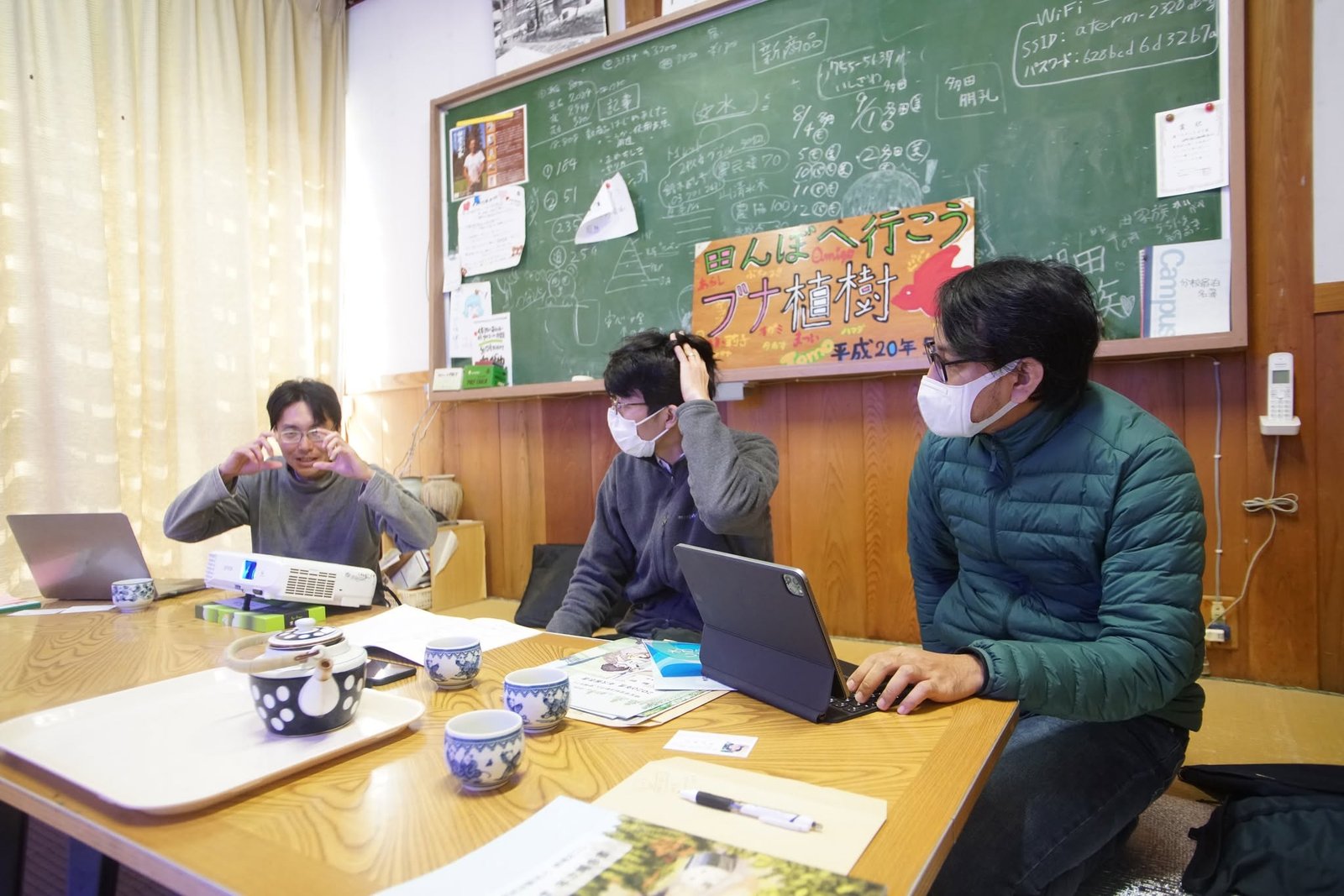
The research involved Pandu Purwandaru and Aoki Hironobu from Lab Desain Budaya (Design Culture Laboratory), together with Feng Tien Wei from Taiwan. The principal informant was Tada Tomoyoshi of the Iketani Iriyama Regional Revitalization NPO Committee, a nonprofit organization dedicated to revitalizing rural areas, particularly two villages in Japan with a distinctive agricultural and cultural heritage associated with Yamashimizu rice.
This distinctive rice is cultivated using a natural irrigation system supplied by melting snow. The relationship between the natural environment, rice farming, and community life represents an important local resource and provides a foundation for exploring sustainable approaches to rural development.
The research examined the background of the revitalization initiative, the process of designing and implementing its activities, the factors supporting program continuity, and the evaluation of its revitalization strategies. The findings identified two main categories of activities: internal initiatives focused on maintaining agricultural landscapes through land ownership arrangements, local cultural workshops, and housing development to facilitate the settlement of newcomers; and external initiatives consisting of lectures, seminars, and discussions designed to share experiences and lessons learned from the revitalization program.
The sustainability of the program was supported by six key aspects: economic factors, the involvement of newcomers and volunteers, the characteristics of the local community, agricultural potential, sustained collaboration, and the use of social media. These findings indicate that rural revitalization depends not only on the availability of local resources but also on the ability to establish and maintain relationships and collaboration between rural communities and external stakeholders.
Through the Iketani Iriyama case study, the research offers insights into how urban–rural exchange can be developed as a strategy for rural revitalization. The Japanese experience provides valuable lessons for further exploration in Indonesia, particularly in efforts to connect the cultural and natural resources of rural areas with knowledge, networks, and economic opportunities from urban communities.
The study also highlights the importance of a collaborative approach that recognizes rural communities as active participants in their own development. By linking local agricultural practices and cultural heritage with external support and knowledge exchange, urban–rural collaboration can create opportunities to sustain rural livelihoods while strengthening local identity.
Research Publication
The full research article is available in Sodality: Jurnal Sosiologi Pedesaan, published by IPB University (Bogor Agricultural University), Indonesia.
Read the full article: https://journal.ipb.ac.id/index.php/sodality/article/view/54965